Seattle Waterfront Proposals Presented September 15th
(note: we're on MVVA's team for the waterfront)
With all the disagreement about how to replace (or not) the viaduct’s car capacity, there’s been very little discussion of what the waterfront will actually look like. The entire purpose of burying the freeway, after all, is to create a wonderful urban space.Luckily, that’s about to change, as Seattle has chosen four architects (out of 30 applicants) to present their visions to the public
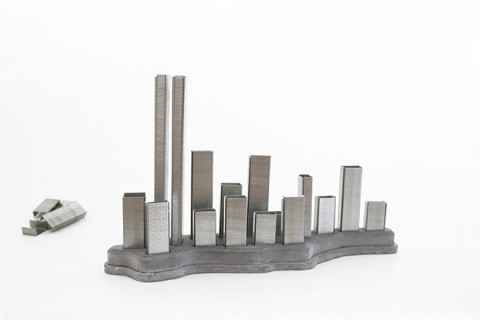
high-rise staples (Swiss Miss)
Straightforward Street Art Makes the Case for Cycling (GOOD)
You just have to click the link to see the art. Safe to say I would buy a t-shirt with this on it.
Victoria to focus on new urban villages (Times Colonist
Victoria residents made it clear they want more village centres like the one on Cook Street in Fairfield.
Killing me slowly: the health and emotional toll of long commutes (Sightline)
If all commutes can kill, at least I’ll go down with the wind in my hair, a smile on my face, and feeling fit and energized (and smug, apparently).
Bike lane good for business? (Straight)
Hornby bike lane will get more people “spending more money” downtown, VACC says
Job creation through smart land use + transportation (Switchboard NRDC)
The nation’s workforce has an important stake in smart, environmentally sound development and transportation. At a time when unemployment has reached disturbing levels, public policy should take advantage of the job-creation benefits of a robust agenda for smart, sustainable communities.
Time to prime downtown Tacoma (The Olympian)
While the economy has private development in the deep freeze, Tacoma should make good on what it has promised for downtown and get ready for the thaw.
The Waterhouse at South Bund by NHDRO (dezeen)
Chinese architects NHDRO have transformed a disused Japanese army headquarters in Shanghai into a hotel, maintaining the building’s stripped concrete and brick walls while adding a new Corten steel extension on the roof.
Cloudscapes by Tetsuo Kondo Architects and Transsolar (dezeen)
Venice Architecture Biennale 2010: Japanese studio Tetsuo Kondo Architects and environmental engineering firm Transsolar have suspended a cloud inside the Arsenale exhibition space at the Venice Architecture Biennale.
sneak peek: ulrica wihlborg (design sponge)
ulrica wihlborg and her husband craig forrest live with their two sons, axel, 3, and gustav, 1, in los angeles but for five weeks every summer, they escape to ulrica’s homecountry of sweden to this beautiful property in the southern town of esseboda.
Friday Feature: Peg
Who are you and what do you do?
I’m me. I do what I can.
Who is the teacher who had the most influence on you and why?
Dr. Charles Young, who taught Architectural History and was the pre-Architecture advisor at Calvin College in Grand Rapids, Michigan. When he asked me why I wanted to pursue architecture, I didn’t have a clear answer – it was just an instinct, blind faith and curiosity. But he gave me a direction – a direction of inquiry and geography – and told me to head west, because that’s where things were happening. (With the support of my husband, I took that advice. Here I am.)
Sunshine, a breath of clear air, smiling people; the unending potentiality of possibility.
What schooling is required for success in your career?
There are various paths, but I did a four-year BA in Communications and Business before taking the professional MArch program at UBC, which took me another four years. Then the internship ordeal, which took another few years. And then there’s the professional development seminars –(will it ever end!?)
What is the best advice you were ever given?
Give your best. Never settle.
Did you always want to be in this field or did you have other career aspirations growing up?
I didn’t discover architecture until the summer after my freshman year at university. Previously, I thought I wanted to be an animator, a journalist, or an entrepreneur. My high school Lit class thought I’d end up a flautist.
What made you decide to go into your field?
It’s all my little brother’s fault. He thought he wanted to be an architect, so he, my father and I went over to a local architect’s house to find out more. He talked to us about the significance of spaces and the influence they have on our lives – even the arrangement of rooms in a home. Something in my head switched on, and the world suddenly made a little more sense to me. I went back to college in the fall curious about something that had previously been only on the edge of my awareness. I started exploring, and haven’t stopped.
(My brother abandoned that particular ambition when he found out how many art classes were involved. He’s a statistician now.)
What did your family think of your chosen field?
My family was completely encouraging and supportive, my parents especially, who took my advisor’s advice “Go travel” seriously enough to send me on a 3-week Art and Architecture course to Italy the very next January.
Were there any projects during your academic or professional career that really influenced you or had a large impact on you either positively or negatively? Please explain.
Maybe it’s the one I failed. One term I went to Athens and Cairo. Things never really came together for me in the Athens studio course. It taught me hard lessons about fear, self-consciousness, clarity of expression, asking for help, and that it doesn’t have to be hard – what seems obvious to you is probably new and interesting to everyone else.
Did you have to write a thesis? What did you write about and why?
My thesis project was on the communicative power of architecture in a shifting paradigm of sustainability, focusing on a study of the neighbourhoods of New Gourna, Egypt, Levittown, USA, and East Clayton, Surrey – and developing a live-work environment in East Clayton, Surrey.
What part of your field interests you most?
Architecture is a world of constantly changing collaboration – large changes born of new ideas and technologies as well as small changes that redirect collaborative effort. It really appeals to my revisionist tendencies.
What keeps you motivated in your field?
The guarantee that I’m going to learn something new today. And that today is not yesterday, and tomorrow won’t be today.
Subscribe to:
Posts (Atom)

